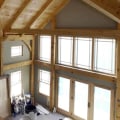
Timber frame architecture has witnessed a resurgence in recent decades, celebrated for its exposed beams, artisan joinery, and natural warmth. Yet as homeowners seek traditional beauty without sacrificing contemporary comfort, a key challenge emerges: marrying timber construction with the expectations of modern heating, ventilation, and air-conditioning systems. Unlike conventional stick-built homes that hide mechanical systems behind drywall and within narrow cavities, timber frames rely on open spatial volumes and fewer interior partitions. This distinction influences mechanical routing, air distribution, insulation strategy, and even system sizing, creating a dynamic relationship between old-world craftsmanship and present-day engineering.
Spatial Dynamics and Mechanical Routing
Because timber frame designs tend to feature soaring ceilings, open floor plans, and large windows, HVAC designers must address unique climate-control concerns. High ceilings mean rising warm air and stratification, so mechanical engineers often specify variable-speed blowers, ceiling fans, or hydronics to maintain comfort at occupant level. Routing ductwork can also be complex: the exposed nature of the frame leaves fewer concealed chases for bulky ducts. Many projects turn to slim duct mini-splits, high-velocity small-diameter systems, or radiant floor heating to preserve aesthetics without compromising performance. These decisions require early collaboration between the framer, architect, and mechanical contractor to avoid costly rerouting late in the build.
Insulation, Air Sealing, and Material Behavior
Timber frames excel at structural expression but rely heavily on enclosure systems—structural insulated panels (SIPs), double-stud walls, or exterior insulation—to achieve modern energy standards. HVAC performance hinges on how well these assemblies manage air infiltration and thermal bridging. SIPs, for example, deliver high R-values and tight envelopes, which allow for smaller equipment and superior humidity control. However, ultra-tight homes require deliberate ventilation strategies to avoid stale air and moisture buildup. Wood itself complicates matters further: as an organic material, it responds to humidity, shrinking or swelling across seasons. If humidity swings are too dramatic, occupants may notice creaking joinery, floor gaps, or finish cracks, underscoring the importance of balanced humidity control through ERVs, HRVs, or stand-alone dehumidification.
Glazing, Solar Gain, and System Sizing
Timber frame aesthetics favor generous windows that frame landscapes and bathe interiors in natural light. While visually compelling, expansive glazing alters heating and cooling loads throughout the year. Mechanical designers must model solar heat gain coefficients (SHGC), orientation, and shading devices before sizing equipment. Undersized equipment struggles during peak heat waves or cold snaps; oversized units short-cycle, waste energy, and impair humidity control. Timber structures also benefit from thermal mass effects when paired with stone floors or masonry hearths, helping buffer temperature swings and enabling low-temperature radiant systems to shine.
Maintenance and Long-Term Performance
Once occupied, timber homes depend on consistent mechanical upkeep. Filters, condensate lines, ERV cores, and radiant boilers all carry periodic maintenance requirements that safeguard indoor comfort and preserve the timber structure itself. Neglected humidity control can cause condensation at thermal bridges, staining beams or encouraging mold in concealed cavities. In commercial analogs, ongoing facility care provided by commercial cleaners illuminates how routine maintenance practices support both health and longevity, reinforcing the idea that mechanical systems and architecture must be treated as a unified ecosystem.
Craft Meets Engineering
Ultimately, the interaction between timber frame architecture and modern HVAC systems is a story of collaboration. When architects, framers, energy consultants, and mechanical engineers coordinate early, they align aesthetics with performance, ensuring that radiant floors, air-tight enclosures, and balanced ventilation complement hand-crafted joinery. The result is a living environment that feels timeless yet performs to 21st-century expectations—proof that craftsmanship and engineering are not opposing forces, but partners in creating resilient and soulful buildings.